SKIN & HAIR EDUCATION
Skin Barrier Repair: A Gentle Guide for Dry, Stinging Skin
When your usual skincare starts to sting, simplify your routine and look for the cause.
You wash your face, apply your usual cream and suddenly feel a sting. By afternoon, your cheeks feel tight again. Before adding another serum, it helps to understand what your skin is reacting to. Skin barrier repair starts with gentle care and finding the trigger. Persistent irritation also deserves a proper diagnosis.

What is the skin barrier?
Your skin separates your body from the outside environment. Its outermost layer, the stratum corneum, contains tightly arranged cells and a surrounding lipid structure. Together, these help regulate water loss and limit the entry of harmful substances. When this protection is disturbed, skin can become less comfortable and more easily irritated.
“Damaged skin barrier” describes a problem with this function; it does not identify a single disease or tell you which treatment you need.
Signs your skin may need gentler care
Possible clues include rough or flaky patches, itching, tenderness and stinging when products touch the skin. These symptoms overlap with several skin conditions, so an online checklist cannot confirm the cause.
Watch for changes in comfort and texture as well as colour. Contact dermatitis can look red on lighter skin and brown, purple or grey on darker skin. A reaction may appear hours or days after contact with a trigger.
What can disrupt the skin barrier?
Repeated exposure matters. Soaps, detergents, friction and frequent contact with water can irritate the skin. Some topical medicines, including retinoids and benzoyl peroxide, can also cause irritation. Heat, sweating and changes in humidity may contribute. Several triggers can act together.
A routine that feels comfortable for someone else may be too much for you. Keep a short product list rather than trying to identify the cause from a single “good” or “bad” ingredient.
A simple skin barrier repair routine
1. Reduce the products that irritate your skin
Set aside optional scrubs, exfoliating treatments and fragranced products if they worsen discomfort. Avoid repeatedly testing new products on irritated skin. If a prescribed acne or other treatment seems responsible, contact the prescriber for advice about adjusting it. Identifying and avoiding the cause is central to managing contact dermatitis.
2. Cleanse gently
Choose a mild cleanser, use warm rather than hot water, and rinse without prolonged rubbing. Gently pat dry with a soft towel. Keep baths and showers brief. A clean face does not need to feel tight or heavily scrubbed.

3. Moisturize according to your skin’s needs
Apply a fragrance-free moisturizer after washing, while the skin is still slightly damp, and again when it feels dry. Creams or ointments may suit very dry areas better than a light lotion. “Unscented” is not the same as fragrance-free: a product can contain ingredients that mask an odour.
If heavier products feel uncomfortable or you are prone to clogged pores, ask about a lighter, non-comedogenic option. Different areas of the same face may need different amounts.

4. Protect your skin outdoors
Use a broad-spectrum, water-resistant sunscreen with SPF 30 or higher on exposed skin, alongside shade and protective clothing. Reapply approximately every two hours outdoors and after swimming or sweating, following the label. For sensitive skin, a sunscreen containing zinc oxide or titanium dioxide may be an option.

Your morning and evening plan
Use this as a reminder of the steps above, adapting it to your clinician’s instructions.
MORNING
Keep it comfortable
- Cleanse gently as needed.
- Moisturise dry areas.
- Use sunscreen before going outdoors.
EVENING
Keep it simple
- Gently remove sunscreen, makeup and daily buildup.
- Apply a tolerated moisturiser.
- Leave out unnecessary products that irritate.
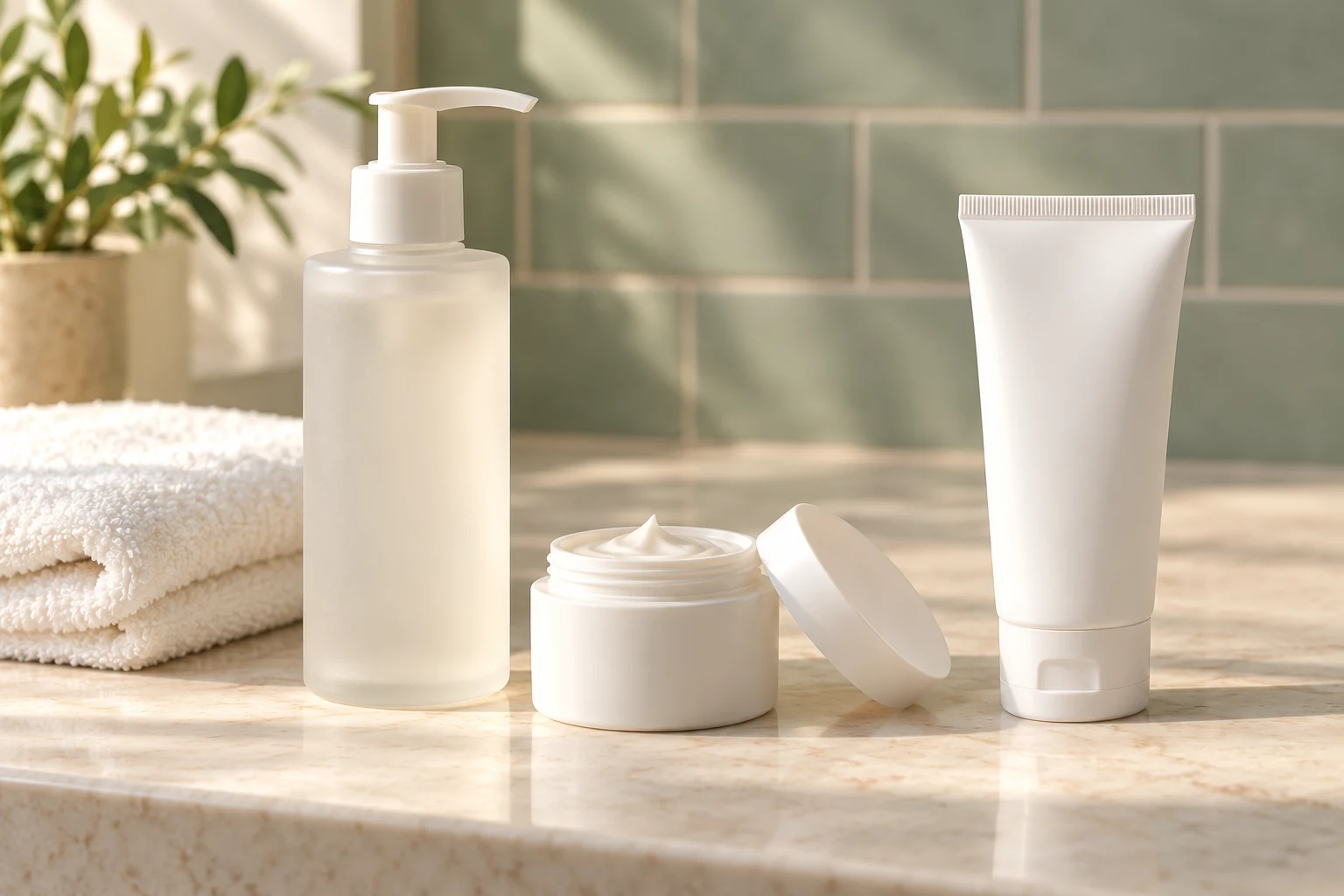
Which moisturiser ingredients are useful?
Read the whole formula and judge how your skin tolerates it. No single ingredient makes every product suitable for everyone.
| Ingredient or group | What it contributes |
|---|---|
| Glycerin | A humectant that helps attract and retain water. |
| Petrolatum or dimethicone | Occlusive ingredients that reduce evaporation from the skin’s surface. |
| Ceramides | Lipid ingredients used in moisturisers to support hydration. |
Urea and some acidic formulas can sting on cracked or scratched skin. If a moisturiser causes an ongoing reaction, seek advice about an alternative. “Natural” or “organic” does not guarantee that a product will suit sensitive skin.
How long does skin barrier repair take?
There is no dependable deadline for everyone. The cause, repeated exposure and any underlying condition affect recovery. Chronic irritant dermatitis can improve slowly. Avoid judging success by an overnight change or a promise on a product label.
Track whether washing feels more comfortable and dryness or itching is easing. If the same problem keeps returning, take that pattern to a clinician instead of repeatedly rebuilding your skincare collection.
When should you see a dermatologist?
Arrange an assessment for persistent, recurring or severe irritation, particularly when you cannot identify the trigger or your current care is not helping. The cause may need treatment beyond moisturising.
Bring product packaging or clear ingredient photographs, your medicine list and a note of when symptoms began. If your lips are also uncomfortable, read our dry lips care guide.
Frequently asked questions
Can oily skin also feel irritated or flaky?
Yes. Oiliness does not rule out irritation or a skin condition. Select the texture and amount of moisturiser for the areas that need it rather than applying a heavy layer everywhere.
Should I exfoliate peeling skin?
Scrubbing dry, irritated skin may make it less comfortable. Focus on gentle care and moisturising rather than trying to remove every flake.
Can petroleum jelly help?
Petroleum jelly helps limit moisture loss by forming an occlusive layer. Whether it suits your face depends on the area and your skin condition. It does not replace diagnosis or a sunscreen.
Is burning a sign that my skincare is working?
Persistent burning, stinging or an irritated rash is a reason to reassess the product and seek advice. Do not use discomfort as a measure of effectiveness.
Do I need a ten-step routine?
A useful starting point is a short list of products you tolerate, with a clear purpose for each. Keep your routine written down so it is easier to discuss at a consultation.
PERSONALISED DERMATOLOGY CARE
Get help with persistent skin irritation
Discuss your symptoms and skincare routine with Dr Saira Mohsin. Clinic consultations are available in Lahore, with online consultations across Pakistan.