YOUR LASER TREATMENT GUIDE
Laser Hair Removal: What to Expect at Your First Session
Understand the preparation, the appointment and the care that comes afterwards.
You may be ready to spend less time shaving, yet unsure what a laser appointment involves. Will it suit your skin? Should you shave first? How soon will you notice a difference? This guide helps you prepare for a useful conversation with your dermatologist.
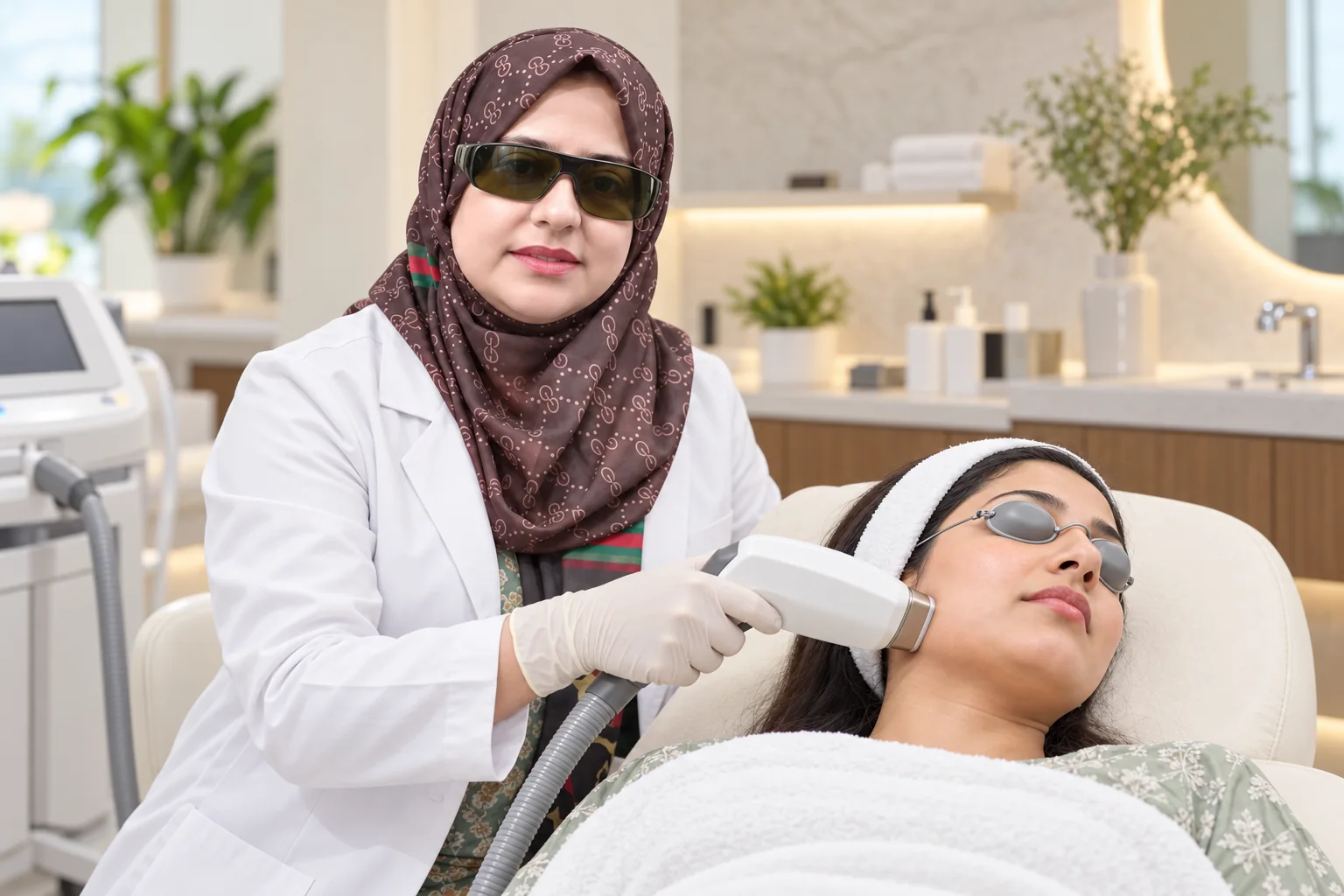
Will laser hair removal suit my skin and hair?
The laser targets pigment in hair. That energy becomes heat and affects the follicle, slowing future growth. Darker hair usually responds better. Blonde, white, grey and red hair respond poorly because they do not absorb the light in the same way.
People with darker skin can have laser hair removal, but appropriate equipment, settings and experience treating that skin tone matter. Ask how the clinician will assess your skin and choose the treatment. The procedure should not be performed over tattoos or around the eyelids and eyebrows.
Fine facial fuzz deserves particular care: it may not be a suitable laser target. A treatment plan should distinguish it from coarse unwanted hair.
Start with a personal assessment
Discuss the areas you want treated, your goals, medicines and previous reactions. Mention recent tanning, cold sores, raised scars and current or past isotretinoin use. Ask who will perform the treatment, their experience with your skin tone, likely benefits, risks and costs.
If new or increasing facial hair comes with irregular periods or other symptoms, ask about the underlying cause. Hormonal changes can contribute to unwanted hair, and assessment may be needed alongside hair removal.

How to prepare for laser hair removal
Get the clinic’s instructions before your appointment. Preparation timings vary, so a generic checklist should support your individual plan.
BEFORE THE VISIT
Protect and prepare
- Avoid tanning and sunless tanning products. Use a broad-spectrum, water-resistant SPF 30 or higher sunscreen before going outdoors.
- Ask when to stop waxing, plucking, threading or hair-removal creams, and when to shave. Arrive with the treatment area prepared as instructed.
AT CHECK-IN
Share any changes
- Tell the team about new medicines, a recent tan or changes in your skin.
- Confirm whether the area should be free of makeup and skincare products.
- Ask whether a test patch is appropriate and when it will be reviewed.

Shaving and waxing are different. Shaving cuts hair at the surface; waxing removes it from the root. Do not assume that all hair-removal methods are interchangeable during a laser course.
What happens during the appointment?
The treatment area is cleaned, and everyone in the laser room needs suitable protective eyewear. You may feel brief warmth, stinging or a snapping sensation. A small area usually takes less time than a large one. Tell the practitioner how your skin feels throughout the session.
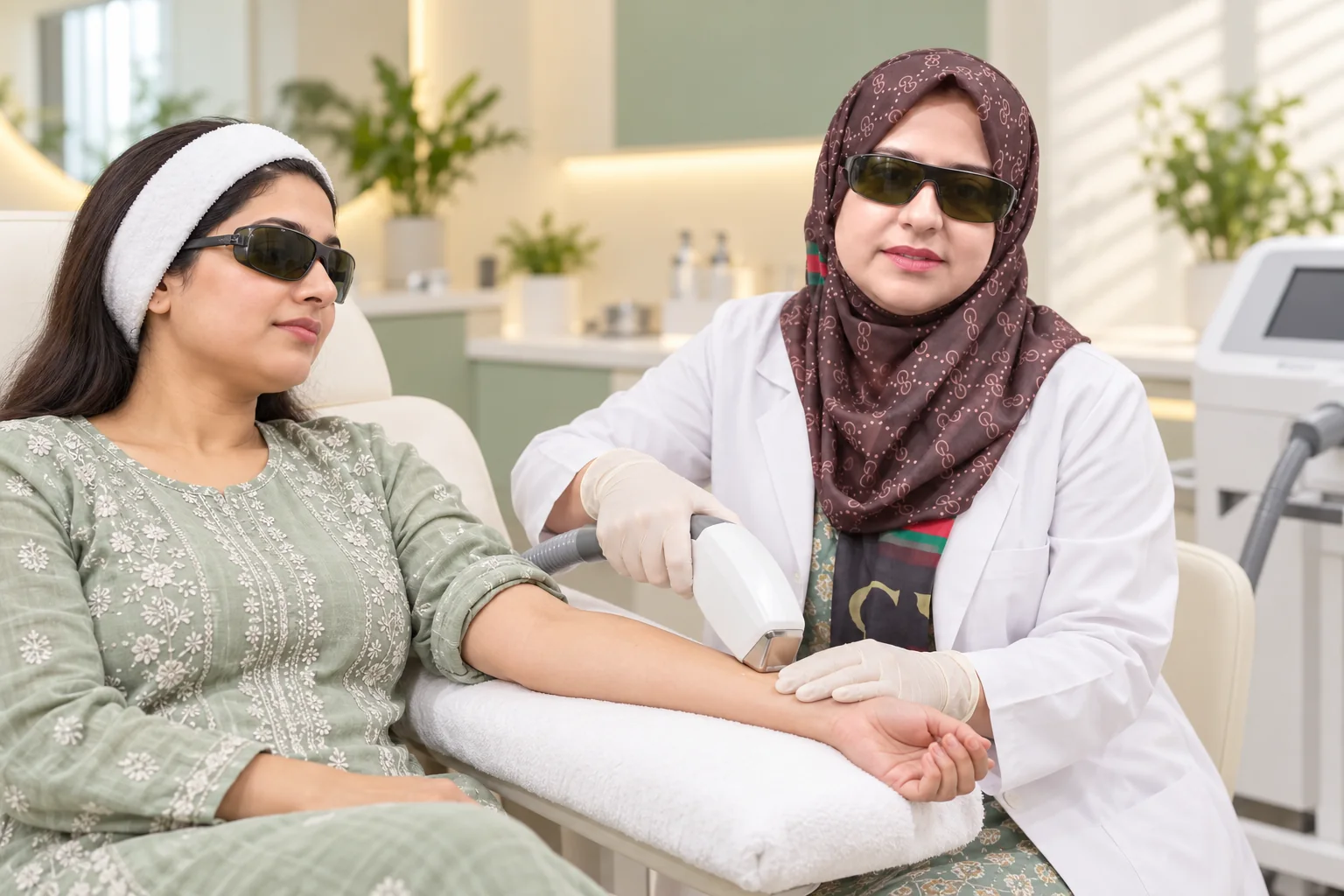
A test patch can help assess your response, but a comfortable test does not remove every risk from later treatments. Keep following the preparation and aftercare instructions throughout the course.
How many sessions will I need?
Plan for a course rather than one visit. Hair grows in cycles, so repeated appointments target hairs at different stages. The number of sessions and spacing depend on your treatment area and response. Some people need maintenance later. Ask for an estimated course and a review point, rather than treating a fixed package as a guaranteed outcome.
Do not judge the result immediately after leaving the clinic. Treated hairs can shed over the following days or weeks.
Laser hair removal aftercare: keep it gentle
Temporary redness, swelling or discomfort can occur. A cool compress may help. Follow your clinician’s sun-protection instructions and avoid exposing the treated area to direct sunlight.
| Part of your routine | What to confirm |
|---|---|
| Skincare and makeup | Which products to use and when to restart them. |
| Heat and exercise | How long to avoid hot baths, saunas, swimming and strenuous exercise. |
| Shaving and touching | When to shave again; avoid rubbing, scratching or picking the area. |
| Sun protection | How to protect the area while the skin settles and between visits. |
Your clinic’s timings take priority because aftercare depends on the treatment and skin response.

Which side effects should I know about?
Burns, blisters, pigment changes, infection and scarring are possible. Cold sores may also recur. Appropriate assessment and an experienced practitioner reduce risk, but cannot make treatment risk-free. Rarely, hair growth around the treated area can increase.
Planning treatment in Lahore
For appointments with Dr Saira Mohsin, see the laser hair removal treatment page. Ask for a written explanation of the areas included, consultation or test-patch fees, session charges and review arrangements. Confirm what happens if more appointments are needed. This makes it easier to compare the whole plan rather than only an advertised price.
Frequently asked questions
Is laser hair removal completely permanent?
It can provide lasting reduction, but some hair may return and maintenance may be needed. A promise that every hair will disappear forever is unrealistic.
Can darker skin be treated?
Yes, when the treatment is appropriate and the practitioner has relevant experience. Ask specifically about experience with your skin tone.
Does it hurt?
Sensation varies. People often describe short stings or a rubber-band snap. Discuss comfort measures and speak up during treatment.
Should I stop my acne medicine first?
Give the clinician your complete medicine list, including isotretinoin. Get individual advice before changing a prescribed treatment.
Can I book a course without an assessment?
An assessment helps establish suitability, risks and realistic expectations before you commit. Use the consultation to compare the proposed plan with your priorities.
PERSONALISED DERMATOLOGY CARE
Plan your first consultation
Discuss unwanted hair and your treatment goals with Dr Saira Mohsin in Lahore.