Yes. Acne can continue into adulthood or begin later in life. An assessment helps choose care suited to your current skin and circumstances.
CONSULTANT DERMATOLOGIST · LAHORE
Acne Treatment in Lahore
A considered plan for active breakouts, recurring acne and the concerns they leave behind. Meet Dr Saira Mohsin to discuss your skin and the next steps in your care.
MBBS · MD Dermatology (King Edward Medical University)
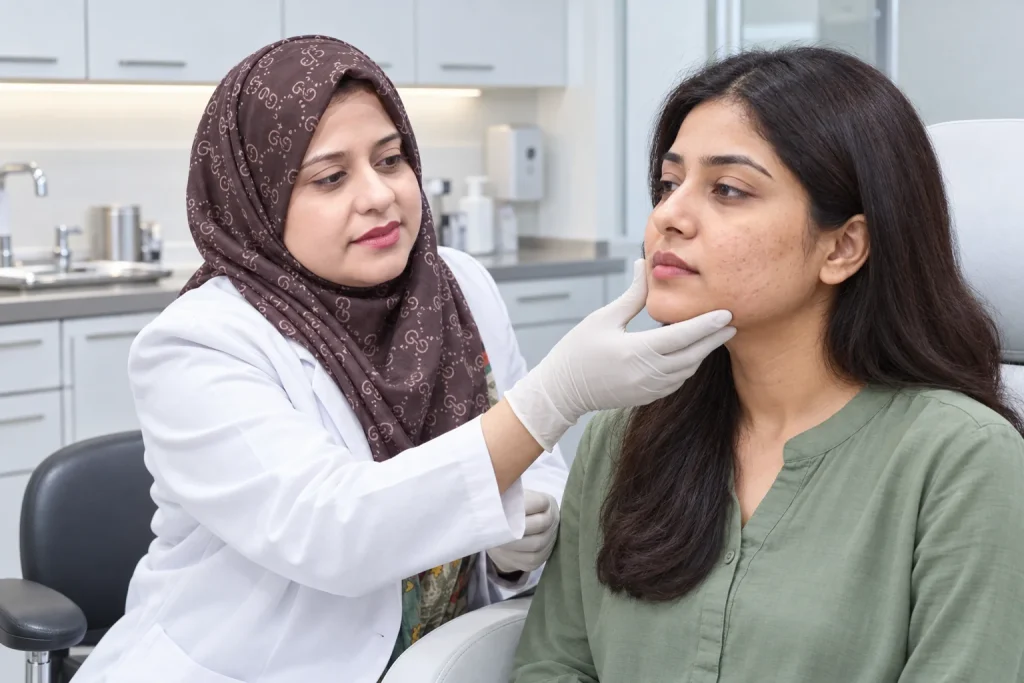
Care begins with an assessment
Acne varies from person to person. An examination helps distinguish active acne from other conditions and guides a plan based on the type and severity of breakouts.
Understand your skin
Discuss when breakouts started, the areas affected, previous treatment and the products you use. Bring any prescriptions or relevant medical history to your appointment.
Review your options
Treatment may include topical medicines, oral medicines or selected procedures. The choice depends on your skin, medical history and response to earlier treatment.
Plan your follow-up
Agree on a manageable routine and ask when to return. Progress and tolerability can guide later adjustments; improvement takes time and results vary.
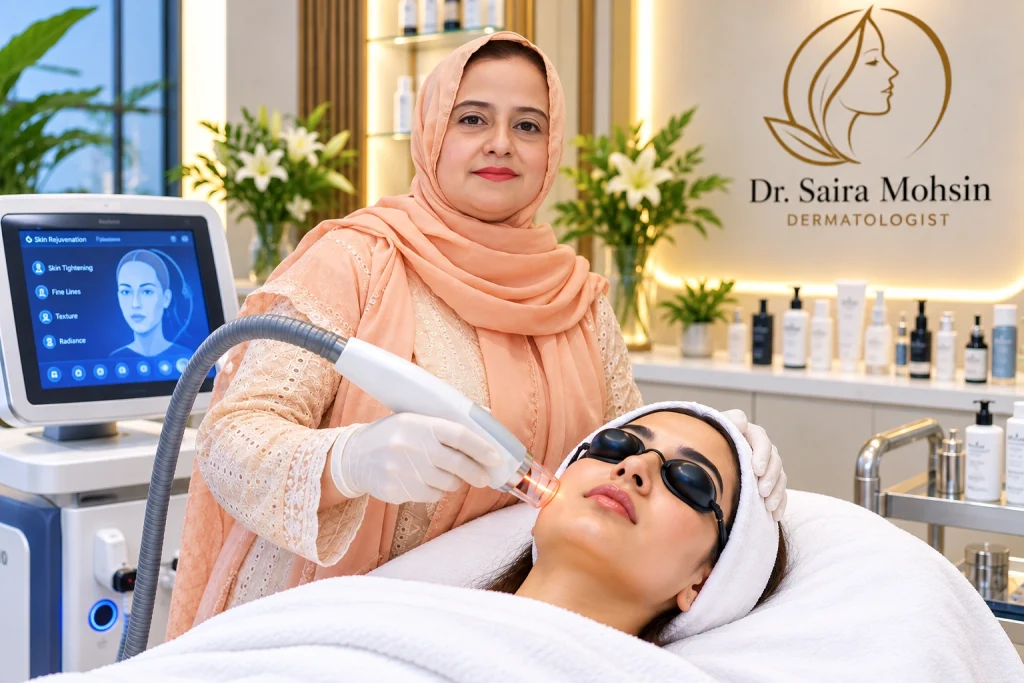
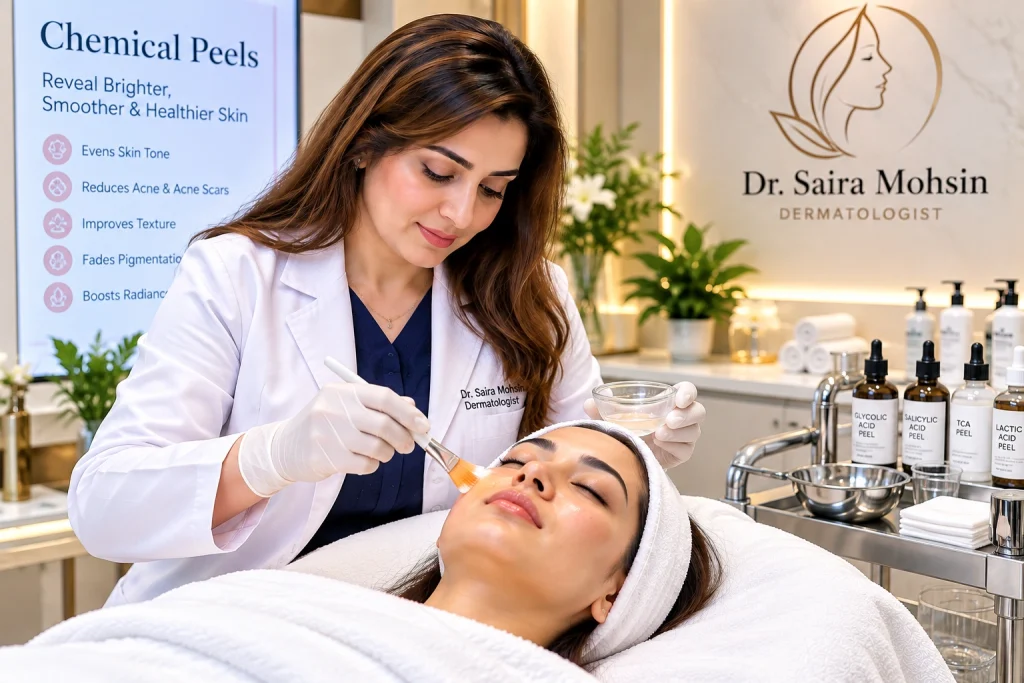
Active acne, marks or scars?
These concerns may need different approaches. Controlling active breakouts and addressing lasting texture changes are separate parts of care. Tell Dr Saira Mohsin which concern matters most to you.
What causes acne?
Acne develops when hair follicles become blocked with oil (sebum) and dead skin cells. Hormones increase oil production, bacteria multiply inside blocked pores, and the skin becomes inflamed — producing blackheads, whiteheads, pimples or deeper, painful spots. Acne is very common in teenagers, but many adults continue to have it, and some develop it for the first time in their twenties or thirties.
Several things can make acne worse: stress, some cosmetics and hair oils that block pores, certain medicines, frequent touching or squeezing of the skin, and, for some women, hormonal changes around periods. Because the cause and pattern differ from person to person, treatment works best when it is chosen after your skin has been properly assessed.
Acne at different ages
Teenage acne is usually driven by hormonal changes at puberty and often affects the forehead, nose and chin. Adult acne is common in women and tends to appear along the jawline and lower face, sometimes flaring before periods. Acne can also affect the back, chest and shoulders, where the skin is thicker and spots can be deeper.
The right approach depends on your age, skin type, the kind of spots you get, and whether marks or scars are forming. Early, well-chosen treatment can reduce the chance of long-lasting marks and scarring, which are harder to treat later than the acne itself.
Looking after acne-prone skin
Daily habits support your treatment plan:
- Cleanse gently twice a day with a mild cleanser; scrubbing irritates acne and can make it worse
- Choose skincare and makeup labelled non-comedogenic, and remove makeup before bed
- Avoid squeezing or picking spots — it increases inflammation, marks and scarring
- Use sunscreen daily; some acne treatments make the skin more sensitive to sunlight
- Give treatment time — most plans need 6 to 8 weeks before improvement is clear
If your acne is not improving, is painful or cystic, or is leaving marks, book a review rather than repeatedly changing products on your own.
Your acne questions
No. Treatment is selected according to the type and severity of acne, your medical history and other individual factors.
Acne treatment works gradually. Ask about the expected review interval and how to use the prescribed plan consistently. There is no guaranteed outcome or single timeline for everyone.
Bring a list of your skincare products, medicines and previous treatments. Mention allergies, pregnancy or pregnancy plans before discussing treatment.
Use the appointment button or Contact page to ask about availability, consultation fees and the clinic or online consultation options.
Take the next step for your skin
Arrange a consultation with Dr Saira Mohsin in Lahore. Share your concerns, ask questions and discuss a plan you can follow.
Patient information supports a consultation and does not replace an individual assessment.